Logged In, Locked Out: How Digital Platforms Are Engineering the Next Era of Exclusive Access

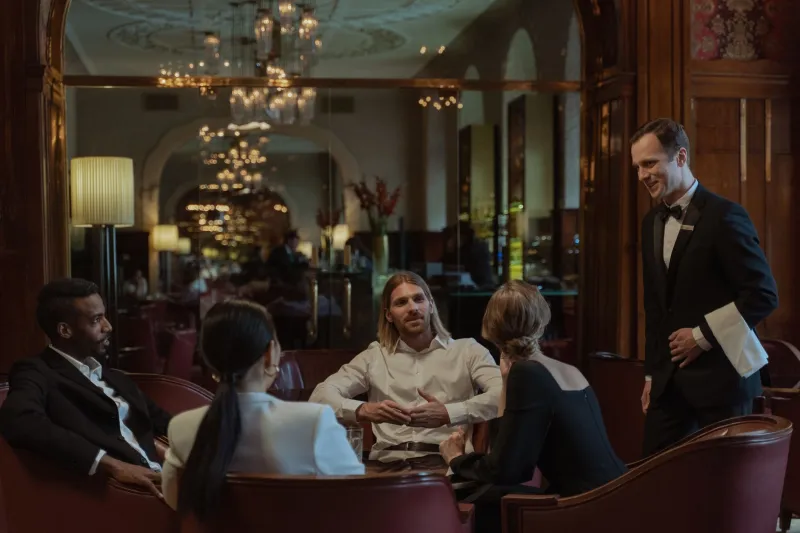
For generations, exclusivity was a physical proposition. The right club required the right address. The right table demanded the right name. Entry was mediated by human judgment — a nod from a maître d', a handshake from a membership committee, a surname that preceded you into the room. That architecture of access, however elegant, was always constrained by geography and the finite nature of human gatekeepers.
That era is not ending. It has already ended.
The most consequential membership structures operating in America today exist entirely within the digital sphere. They are governed not by velvet ropes or leather-bound guest lists, but by cryptographic verification, behavioral algorithms, and proprietary platforms that most people will never encounter — because they are never meant to.
The Architecture of Digital Gatekeeping
To understand how digital exclusivity functions, it is useful to separate its mechanisms from its mythology. The mythology suggests that online spaces are inherently democratic — that the internet dissolved hierarchy by giving everyone equal access to information. The reality is considerably more nuanced.
Platforms like Geneva, Upstream, and a growing constellation of invite-only applications have built their entire value proposition around deliberate scarcity. Membership is not purchased in the conventional sense. It is granted, often through a combination of social vouching, portfolio verification, and algorithmic screening that assesses a prospective member's network density, professional standing, and — in some cases — their digital footprint across other elite platforms.
The underlying logic mirrors what sociologists have long observed in physical institutions: belonging derives its value from exclusion. A club that admits everyone is, by definition, a club that confers nothing. The digital equivalents have simply industrialized that principle at a scale and precision that brick-and-mortar institutions could never achieve.
NFTs as Membership Infrastructure
Perhaps no development better illustrates the formalization of digital gatekeeping than the emergence of NFT-based access systems. While the broader NFT market has experienced well-documented volatility, a specific subset of these tokens — those functioning as membership credentials rather than speculative assets — has quietly matured into a sophisticated infrastructure layer.
Projects such as Flyfish Club, which operates a members-only restaurant in New York accessible exclusively to token holders, demonstrated that the NFT-as-key model could bridge the digital and physical realms in commercially viable ways. But the more consequential applications are those that remain entirely within digital environments: investment DAOs that require token ownership to participate in deal flow, creative communities where NFT verification unlocks collaborative tools and peer introductions unavailable to the general public, and private forums where asset holders convene to discuss opportunities that predate any public announcement.
What distinguishes these systems from a standard paywall is the transferability and social signaling embedded in the credential itself. Holding the right token communicates affiliation, taste, and access history in ways that a subscription receipt simply cannot. It is, in essence, a digital signet ring.
Algorithm-Gated Content and the Curation Paradox
Beyond formal membership structures, a subtler form of digital exclusivity is emerging through algorithmic curation — one that its architects rarely advertise openly.
Several platforms catering to high-net-worth individuals and institutional investors have moved toward content environments where what you see is determined not merely by what you pay, but by what you have previously demonstrated you understand. Engagement patterns, professional credentials linked at onboarding, and behavioral signals within the platform collectively determine which briefings, introductions, and opportunities surface in a given member's feed.
This creates what might be termed a curation paradox: the platform appears uniform to all members, yet delivers meaningfully different experiences based on criteria that are never fully disclosed. Two individuals paying identical membership fees may encounter entirely different networks, entirely different deal opportunities, and entirely different versions of what the platform believes itself to be.
For members who clear the invisible thresholds, the experience is one of uncanny relevance — a sense that the platform understands their position and ambitions with unusual precision. For those who do not, the platform simply feels less useful, and they quietly disengage, never fully understanding why.
The Psychology of the Invisible Credential
What makes digital exclusivity particularly potent is its opacity. Traditional status markers — a club tie, a particular zip code, a vehicle in a certain price range — are legible to observers. They function as social signals precisely because they can be read by others.
Digital credentials operate differently. The most significant ones are invisible to anyone outside the platform. A member of a private investment community may hold access to deal flow that rivals any legacy institution, yet carry no outward indicator of that standing. This invisibility serves a dual function: it protects the community from unwanted attention while simultaneously elevating the psychological value of belonging for those inside. To know is to know. The credential derives its meaning from its unverifiability to outsiders.
This dynamic has not been lost on luxury brands seeking to extend their exclusivity into digital channels. Several heritage houses have launched proprietary applications available only to clients above a certain lifetime spend threshold, offering early access to limited releases, private consultations with creative directors, and curated event invitations. The applications themselves are not advertised. They are mentioned, quietly, during in-store appointments with clients who have already demonstrated the requisite commitment.
Who Is Setting the Standard
Among the platforms currently shaping what elite digital membership looks like in practice, a few deserve particular attention.
Altitude, a private network for ultra-high-net-worth individuals, has built its reputation on the strictness of its verification process and the quality of its member introductions. The platform does not accept applications in the conventional sense; prospective members are nominated by existing ones and evaluated through a process that takes months. The waiting experience is itself part of the design — it communicates that membership, once granted, carries genuine weight.
In the investment space, platforms connecting accredited investors to pre-IPO opportunities and alternative assets have increasingly moved toward tiered access models where the most sensitive deal information is visible only to members who meet specific criteria around portfolio size, investment history, and platform engagement. The result is a nested hierarchy within an already exclusive environment — exclusivity compounding upon exclusivity.
For the culturally oriented, a number of closed Discord servers and private Slack communities have emerged as genuine power centers for industries ranging from contemporary art to early-stage technology. Entry to these spaces is not monetized in any direct way; it is earned through demonstrated expertise, peer endorsement, and — critically — the willingness to contribute meaningfully rather than merely consume.
Access as Identity
What the most sophisticated observers of this landscape recognize is that digital gatekeeping is not simply a new distribution mechanism for old privileges. It represents a genuine reconfiguration of how status is constructed and maintained in American life.
The institutions that once held a monopoly on access — elite universities, legacy social clubs, established financial networks — are finding that their physical gatekeeping capacity no longer determines the ceiling of what is possible. A founder who holds the right digital credentials, belongs to the right private communities, and has cultivated the right algorithmic relationships may operate with advantages that no traditional institution can confer or revoke.
For iMisu VIP members navigating this landscape, the strategic implication is clear: the most valuable memberships of the next decade will not be announced in press releases or displayed on waiting room walls. They will exist in platforms most people have never heard of, governed by criteria that are never fully explained, and conferring access that no amount of conventional prestige can substitute for.
The door is digital. The question, as always, is whether you know where to find it.